
Income Tax Slabs Explained Simply – Old vs New Tax Regime (AY 2026–27)
- Income Tax Slabs Explained Simply – Old vs New Tax Regime (AY 2026–27)
- 1. What Are Income Tax Slabs?
- 2. How Income Tax Slabs Work in India
- 3. Income Tax Slabs – New Tax Regime (AY 2026–27)
- 4. Income Tax Slabs – Old Tax Regime (AY 2026–27)
- 5. Old vs New Tax Regime – Comparison
- 6. Which Tax Regime Should You Choose?
- 7. Income Tax Slabs for Senior Citizens
- 8. Example: Income Tax Calculation (Simple)
- 9. Common Mistakes While Selecting Tax Regime
- 10. How a CA Helps You Save More Tax
- Conclusion
1. What Are Income Tax Slabs?
Income tax slabs are income ranges on which different tax rates are applied.
As your income increases, the tax rate also increases — this is called progressive taxation.
In India, income tax slabs are decided every year by the Government of India and apply to:
- Salaried individuals
- Freelancers
- Professionals
- Business owners
2. How Income Tax Slabs Work in India
Income is divided into parts (slabs), and each slab is taxed at a different rate.
Important:
Tax is not charged on your entire income at the highest rate.
It is calculated slab-by-slab.
Example (simplified):
If a slab is taxed at 20%, only that portion of income is taxed at 20%.
3. Income Tax Slabs – New Tax Regime (AY 2026–27)
The New Tax Regime is now the default regime.
New Tax Regime Slab Rates
| Annual Income | Tax Rate |
|---|---|
| Up to ₹3,00,000 | Nil |
| ₹3,00,001 – ₹6,00,000 | 5% |
| ₹6,00,001 – ₹9,00,000 | 10% |
| ₹9,00,001 – ₹12,00,000 | 15% |
| ₹12,00,001 – ₹15,00,000 | 20% |
| Above ₹15,00,000 | 30% |
Rebate under Section 87A
No tax payable if income is up to ₹7 lakh (after rebate).
Deductions NOT allowed in New Regime:
- 80C (LIC, PF, ELSS)
- 80D (Medical insurance)
- HRA
- Home loan interest (Section 24)
- LTA
4. Income Tax Slabs – Old Tax Regime (AY 2026–27)
The Old Tax Regime allows multiple exemptions & deductions.
Old Tax Regime Slab Rates
| Annual Income | Tax Rate |
|---|---|
| Up to ₹2,50,000 | Nil |
| ₹2,50,001 – ₹5,00,000 | 5% |
| ₹5,00,001 – ₹10,00,000 | 20% |
| Above ₹10,00,000 | 30% |
Deductions allowed:
- 80C – up to ₹1.5 lakh
- 80D – Medical insurance
- HRA
- LTA
- Home loan interest
- 80CCD (NPS)
- 80G (Donations)
5. Old vs New Tax Regime – Comparison
| Point | Old Regime | New Regime |
|---|---|---|
| Tax slabs | Higher | Lower |
| Deductions | Allowed | Not allowed |
| Compliance | More | Simple |
| Default option | ❌ No | ✅ Yes |
| Best for | Investors | Salaried with no investments |
6. Which Tax Regime Should You Choose?
Choose Old Tax Regime if:
- You invest in LIC, PF, ELSS
- You have home loan
- You claim HRA
- You pay health insurance premiums
Choose New Tax Regime if:
- You don’t invest much
- You want simple filing
- You earn up to ₹7 lakh
- You are a young salaried employee
There is no one-size-fits-all answer.
Tax planning must be done case-by-case.
7. Income Tax Slabs for Senior Citizens
Senior Citizen (60–80 years) – Old Regime
- Basic exemption: ₹3,00,000
Super Senior Citizen (80+ years) – Old Regime
- Basic exemption: ₹5,00,000
New Tax Regime does not provide special exemption for seniors.
8. Example: Income Tax Calculation (Simple)
For FY 2025–26 (AY 2026–27):
- Tax up to ₹7L → Zero tax (Rebate applies)
Example 2: Salary ₹10,00,000 (Old Regime)
Assume deductions:
- 80C → ₹1.5L
- 80D → ₹25,000
Taxable income: ₹8,25,000
→ Tax lower than New Regime
This shows why calculation is important.
9. Common Mistakes While Selecting Tax Regime
- Choosing new regime without calculation
- Forgetting to declare regime to employer
- Ignoring deductions already invested
- Not revising return after wrong selection
- Assuming new regime is always better
These mistakes can lead to higher tax outflow.
10. How a CA Helps You Save More Tax
A Chartered Accountant:
- Compares both tax regimes
- Calculates exact tax liability
- Suggests legal tax-saving options
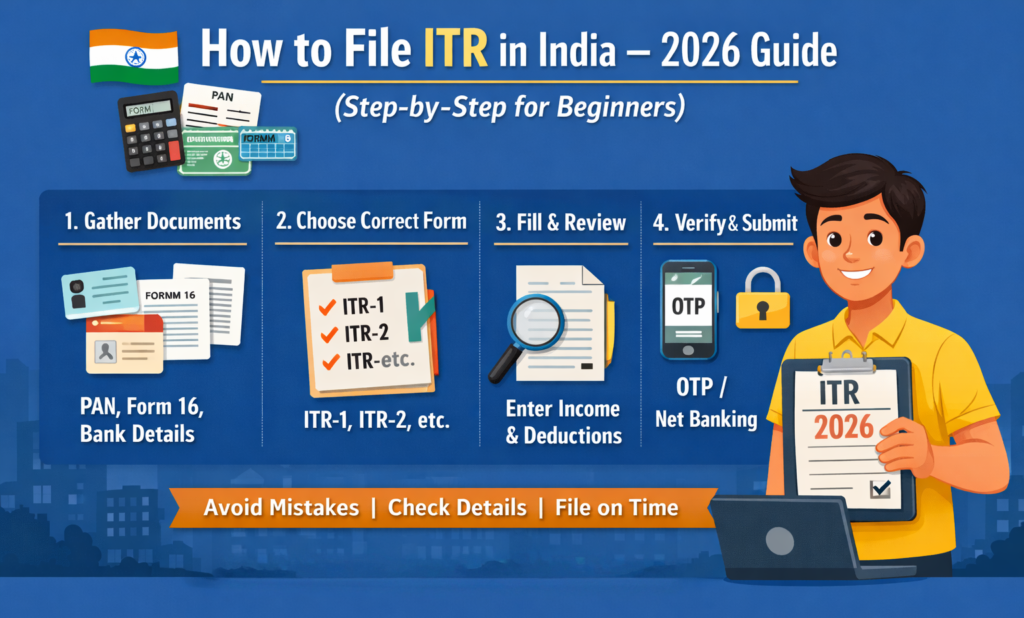
- Files error-free ITR
- Prevents notices & penalties
With professional help, you:
✔ Pay less tax
✔ Avoid mistakes
✔ Get maximum refund
Conclusion
Understanding income tax slabs is essential to avoid overpaying tax.
Choosing between the Old and New Tax Regime should always be done after proper calculation.
If you need expert guidance, NDM & Company provides:
- Tax planning
- Regime comparison
- Accurate ITR filing
- CA-assisted compliance
Contact us today for smart tax planning.